
Cherishing is a Superpower

cherish

I’ve been getting emails lately that almost work on me.

They open with a sharp little comment about something I posted, or a line from my LinkedIn profile. They sound like the sender actually paid attention. Like they noticed me. For a second, there’s a flicker of, “oh, this person sees me, maybe I should write back.”

Then I catch it. They didn’t read my profile. They pointed an AI at it, asked for a hook, and pasted the result into a template. They have no idea who I am. They simulated cherishing me, because cherishing sells, and they wanted the sale without the work of actually caring.

It’s gross. It’s also revealing, because it shows what a lot of marketing has quietly become. A project to hack someone’s emotions. To find the words that perturb a person into feeling chosen, seen, attended to, without the sender ever having to be the kind of person who chooses, sees, or attends.

Bonus or Pizza Party?

Here’s the second story this reminded me of. A leadership team once asked me, “We want to do something nice for our people. Should we give them a bonus, or throw a pizza party?” The question itself was the tell. If you genuinely cared about your people, you would already know which one mattered to them. You wouldn’t be polling an outside consultant about what your own employees value. You’d know, because caring is the thing that produces knowing.

What they wanted was for their people to feel cared for. What they were skipping was caring for them.

The Shortcut That Corrodes

This is the move, over and over. People understand the marketing power of cherishing. They get that humans light up when someone holds their concerns as if those concerns mattered. So they try to manufacture the feeling, on the cheap, with a clever opener or a pizza party. They want the result without the practice. They want the customer or the employee to feel chosen, while not actually choosing them.

The shortcut does not work. Or rather, it works for a week, and then it corrodes the relationship from the inside, because the other person eventually clocks it. I clocked it on those emails. Your employees clock it on the pizza. Your customers clock it when your “personalized” follow-up has nothing to do with them.

Cherishing as a Superpower

Here is what I want you to really hear. In 2025 and 2026, the capacity to actually cherish another human being is a superpower in the marketplace. I think it might be the most profound one available right now. We are surrounded by people pretending to cherish us, and we feel it, and it is making us sicker. So when we run into someone who actually does, the response is almost involuntary. Wow. Where have you been. I want to do business with you. I want to work for you. I want to tell my friends about you.

That is the opening. Not because cherishing is a clever positioning move, but because the rarer it gets, the more it stands out, and the more it stands out, the more it compounds. And it can be developed. It is not a personality trait you either have or do not. It is a practice.

The Practice

If you want your employees to feel cared for, care about them. If you want your prospects to feel cherished, learn them. Sit with their concerns. Find out what they are actually trying to build. Notice what they are afraid of. That is slow, expensive, and inconvenient. It is also the thing.

Entrepreneurs who try to learn the trick of faking it are training themselves into the wrong instinct. They are building a business on a kind of cleverness that will, eventually, leave them surrounded by people who do not trust them. Including, by the way, themselves.

There is a different path. It is slower at the start and much faster after that. Pay attention to real people. Hold their concerns as if they were your own, then design your business so that their winning is also your winning. That is cherishing. The other thing is a costume.
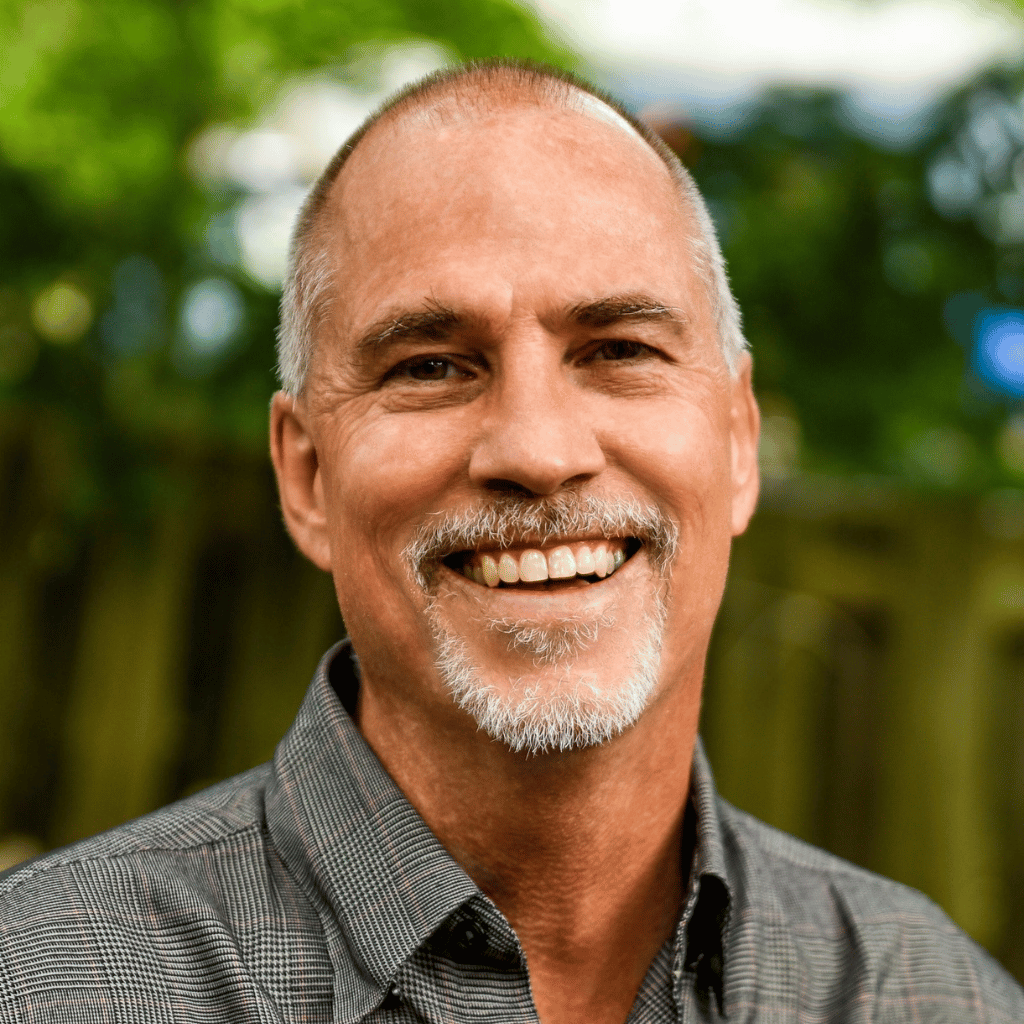
Article By Kevin Suboski

Entrepreneurial Leadership Coach & Founder of Livingston Entrepreneurial Academy

Want more insights like this?

Sign up to get practical business insights delivered straight to your inbox, along with expanded articles, resources, and downloadable white papers.

Sign Up For Our Newsletter →

Explore More Articles

Lockstep Followers: Leadership, Followership, and the Cost of Alignment

clarity

There is a quiet image most leaders carry, even if they rarely say it out loud: the desire to have people follow close behind them.

Not dragging behind. Not resisting. Not waiting to be told what to do. Half a step back, already adjusting, already supporting the movement. Not mindless obedience. Not hero worship. Just alignment.

When leadership works, everything feels lighter. Momentum replaces friction. Decisions move without distortion. You don’t spend your days clarifying, correcting, or recovering from misinterpretation. People anticipate what matters and act accordingly.

This is what many leaders actually want. Not control. Not admiration. But followership that works.

Entrepreneurship is fundamentally a leadership game. Employees are followers. Customers are followers. Even the marketplace “follows” through changed behavior. If no one follows, nothing scales. If no one aligns, effort multiplies but progress does not.

Early in my career, running an IT company with about thirty people, I experienced a stretch where this alignment existed. It wasn’t perfect, but direction traveled cleanly. People leaned into it. They adapted quickly. They often encouraged me forward when I hesitated. It felt like the organization could move as a single body.

That experience clarified something important:

Followership cannot be demanded. It has to be earned.

There is a deeply entrenched belief, what I call a Zombie Operating System™ view of leadership, that alignment, ownership, and loyalty can simply be requested. As if leadership were positional rather than relational.

It isn’t.

You do not get followers in lockstep because you want them. You get them because you have done the work required to deserve them.

There are no shortcuts. But nearly every leader can move toward this. The work falls into three areas.

The First Cost: Clarity

If people are to align behind you, they must know where you are going. Not vaguely. Not emotionally. Not as a general feeling. They need clarity they can organize themselves around.

Most leaders believe they are clear. They are not. Not because they lack intelligence, but because they cannot see the gaps in their own thinking. Others can. And those gaps show up as hesitation, friction, and resistance, which leaders often misinterpret as execution problems.

In working with entrepreneurs, this is almost universal. The vision sounds compelling until it is examined closely. Then it becomes thin. Incomplete. Difficult to follow.

Real vision takes time. It requires sustained inquiry, into the business and into yourself. You must know what you want, what works for you, what kind of life your business is actually building. Without that clarity, you cannot offer others a future they can trust.

If you want a structured place to build that level of clarity, not alone, and not theoretically, Entrepreneurs EDGE exists for exactly this reason.

We don’t just talk about alignment.

We pressure-test it.

We refine it until it can actually be followed.

If you are ready to earn followership instead of hoping for it, this is where that work happens.

People don’t just need to know where you’re going. They need to understand the rules of the game. Your values. Your standards. Your boundaries. These are not cultural accessories, they are orientation devices.

Until you can follow yourself, you cannot expect others to follow you.

What often feels like failure is simply the cost of insufficient clarity.

The Second Cost: Care

Alignment does not come from extracting effort. It comes from protecting and investing in the people who choose to follow you.

This is structural, not sentimental.

When leaders consistently take their people’s concerns seriously, often more seriously than the people do themselves, something shifts. People relax. Loyalty forms. Energy rises.

Not because it was demanded. Because it was earned.

This requires genuine curiosity about who your people are becoming and where they are headed. It also requires a shared trajectory. Alignment is not sameness, but it does require movement in roughly the same direction.

Sometimes the future you help someone build lives inside your company. Sometimes it prepares them for something beyond it. Either way, leadership requires honesty about the deal.

People act like owners when the success of the business produces meaningful gain in their own lives.

You must also overcome cynicism. Many people have been trained to distrust leadership. Care cannot be a tactic. If it is merely instrumental, it will be felt.

And it will fail.

The Third Cost: Openness

If people are half a step behind you, they will see things you cannot. They will detect cracks before they reach the surface. If they have no real influence, if their voice cannot shape direction, their commitment fades.

Alignment without influence becomes compliance.

Compliance never produces lockstep.

This requires humility. When you stumble, others absorb the impact. Leadership that works demands openness to being shaped by those who are organizing themselves around your direction.

The image of followers in lockstep is not a fantasy. It is achievable. And it is one of the most rewarding experiences leadership offers.

But it is not free.

It requires clarity most leaders avoid, care many organizations shortcut, and openness that challenges the ego.

Leadership is not about being admired.

It is about being worth following.

And that is an ongoing discipline.

If you are ready to raise your standard as a leader, Entrepreneurs EDGE begins soon.

Article By Kevin Suboski

Entrepreneurial Leadership Coach & Founder of Livingston Entrepreneurial Academy

Want more insights like this?

Sign up to get practical business insights delivered straight to your inbox, along with expanded articles, resources, and downloadable white papers.

Sign Up For Our Newsletter →

Explore More Articles

Building the Premium Company: How Human-Centered Leadership Creates Entrepreneurial Organization

human centered

Most companies compete by trying to be slightly better than their competitors. They improve efficiency, they manage costs and work harder to execute. 

But the companies that truly dominate their markets operate differently.

They become the premium offer.

Customers prefer them, employees want to work there and competitors struggle to match the experience they create.

Over time these companies often achieve industry-leading margins and build reputations that endure for decades.

When you look closely, something interesting appears.

The advantage is rarely just the product.

It is the organization itself.

These companies maintain an entrepreneurial spirit even as they grow. They continue to innovate. They constantly evolve their offer to take better and better care of their customers.

And most importantly, they build organizations where people bring their intelligence, creativity, and care fully into the work.

This is not an accident.

It is the result of how leadership is practiced throughout the company.

The Hidden Constraint in Growing Companies

Most organizations begin with entrepreneurial energy.

The founder is deeply committed. Early employees care about the mission. Decisions are fast and creative.

But as the company grows, the leadership challenge changes.

Managers are promoted for their technical competence, but have never been taught how to lead people. Communication becomes more complex, alignment becomes harder and energy begins to dissipate.

Gradually the company drifts toward a model of leadership based on control, pressure, and optimization.

I call this the Zombie Operating System™ of business.

It is the default model most organizations inherit, and it produces predictable outcomes: disengagement, burnout, and the slow erosion of the culture that originally made the company special.

The alternative is what I call the Human Operating System™.

This approach recognizes a simple truth: healthy, inspired, committed people perform better.

When people feel genuinely cared for, connected to meaningful work, and trusted to contribute their intelligence, organizations become far more powerful.

This is the foundation of Human-Centered Leadership.

The Art of Entrepreneurial Leadership

For over twenty years, I have been working with entrepreneurs and leadership teams through a framework called The Art of Entrepreneurial Leadership (AEL).

Originally developed for founders, AEL focuses on how entrepreneurs mobilize people without relying on positional authority.

Entrepreneurs lead primarily through:

    • vision
    • care
    • trust
    • shared commitment

These same capabilities are exactly what allow companies to grow without losing their entrepreneurial spirit.

When leadership throughout the company operates from this orientation, something remarkable happens.

People care about the work.

They take ownership of outcomes.

They collaborate more effectively.

And the organization continuously evolves its offer to better serve customers.

Over time this produces exactly what most CEOs want:

A company that becomes the premium offer in its marketplace.

Scaling Human-Centered Leadership

Building this kind of organization requires more than a single training program.

It requires a structured approach to developing leadership throughout the company.

The process typically includes three elements.

Foundational Leadership Education

Leaders across the organization learn the fundamental distinctions of Human-Centered Leadership.

These ideas create a shared language for leadership and establish the principles that guide how the company operates.

Leadership Practice Inside the Company

Leaders regularly engage in structured conversations about how the principles apply to real challenges.

This moves leadership from theory into daily practice and ensures that the culture evolves intentionally rather than drifting.

Ongoing Reinforcement

Leadership cultures require reinforcement as the company grows.

Through periodic retreats and advanced workshops, organizations deepen their understanding of Human-Centered Leadership and address the real challenges that emerge over time.

The Result

Companies that commit to this work often discover that leadership becomes one of their greatest competitive advantages.

Employees become more engaged. Customers feel the difference. Innovation increases.

The organization becomes known not only for what it sells, but for the experience it creates.

This is the foundation for becoming the premium offer in your market, achieving industry-leading margins, and building a company that can endure for generations.

Building a premium company begins with how leadership is practiced throughout the organization.

If you’re interested in building a company where people bring their intelligence, creativity, and care fully into the work, this approach may be worth exploring.

I work with founders and leadership teams who want to scale their organizations without losing the entrepreneurial spirit that made them successful in the first place.

If you’d like to explore whether Human-Centered Leadership could strengthen your organization, you can schedule a conversation with me. I’d love to hear about what you’re building.

Article By Kevin Suboski

Entrepreneurial Leadership Coach & Founder of Livingston Entrepreneurial Academy

Want more insights like this?

Sign up to get practical business insights delivered straight to your inbox, along with expanded articles, resources, and downloadable white papers.

Sign Up For Our Newsletter →

Explore More Articles

Reading the World: What Entrepreneurs Need to See Right Now

article 1

There’s something in the air right now that’s hard to ignore.

If you’re building something, how you interpret this moment will shape what you do next.

People feel it in different ways. Some feel frustrated, anxious, or like the system just doesn’t work anymore. More often than not, I hear a version of the same thought: “Something is wrong… and I don’t think it’s going to get better.”

I’ve been spending some time sitting with that. Not trying to argue with it. Not trying to fix it. Just trying to understand what might actually be going on underneath it.

Here’s a what I’m starting to see.

What’s Actually Breaking Down

Most people think what we’re experiencing is primarily economic or political. That it’s about inflation, inequality, elections, policy, or “late-stage capitalism.”

I don’t think that’s wrong, but I don’t think it tells the whole story.

What I’m seeing is that we’re in the middle of something deeper.

We’re losing a shared way of understanding the world.

There used to be a set of assumptions most people operated inside of. Work hard and you can get ahead. Institutions are generally trustworthy, and the system, while imperfect, basically works.

That shared understanding made coordination possible. It allowed people to make decisions, take risks, and move forward with some level of confidence.

What I’m noticing now is that this shared understanding is beginning to crumble.

Different Realities, Not Just Different Opinions

Some people still believe the system works, that opportunity is there, that things are fundamentally okay if you play the game well.

Others are looking at the exact same world and seeing something very different. They see a system that is rigged, institutions that don’t take care of people, and a future that feels increasingly uncertain.

And here’s the important part:

These are not just different opinions.

They are different realities.

When that happens, coordination becomes difficult. Conversations feel impossible, trust erodes, and everything starts to feel more unstable than it actually is.

The Stories We Start to Tell

As human beings, we are wired to look for threats. We imagine worst-case scenarios and then treat them as if they are inevitable.

So when the shared understanding starts to break down, our biology kicks in. We start to tell ourselves stories about where this is going.

“This is the beginning of the end.”

“This is how it all falls apart.”

“This is permanent.”

Those stories feel true, but they are not always accurate.

A Different Way to Look at This Moment

There’s a model I’ve been revisiting lately, from The Fourth Turning Is Here, that suggests societies move through recurring phases. Periods of stability, questioning, unraveling, and crisis where things are reorganized.

I’m not interested in treating that as a rigid prediction. But it offers a useful orientation.

If you look at what’s happening right now through that lens, it’s not hard to see that we may be in one of those crisis phases. A period where existing structures are no longer holding the way they used to, and something new is forming.

That can be uncomfortable and disruptive, but it is not the same as everything falling apart permanently.

The Role of the Entrepreneur

If you’re an entrepreneur, this moment matters.

While many people respond by pulling back or assuming the worst, entrepreneurs have a different role.

Actually, they have two.

The first is practical.

If you can see that we are in a period of breakdown and reorganization, you can position your business accordingly. Pay attention to where things are not working, where people are frustrated, and where systems are failing to take care of them, and create offers that meet those needs.

There is real economic opportunity in moments like this for those who can see clearly.

The second role is even more important.

Entrepreneurs are one of the few groups that can respond to breakdowns by creating something new that actually works.

When large institutions lose trust, most people don’t have the ability to change them. They can vote, they can complain, or they can withdraw.

Entrepreneurs can build.

They can restore trust in small, meaningful domains. They can create products, services, and experiences that take care of people in ways the larger system currently is not.

In that sense, entrepreneurship is not just an economic activity.

It is a social function.

And in periods like this, it becomes essential.

Where Opportunity Actually Lives

There’s a subtle shift available here.

If you start to see what’s happening not as “everything is broken,” but as “there are breakdowns in how things are working,” you begin to see possibility again.

Breakdowns are where entrepreneurship lives.

It means recognizing the difference between what is actually happening, what we are telling ourselves about it, and how we choose to respond.

Because the stories we adopt in moments like this shape the actions we take. And those actions shape the results we get.

A Question to Sit With

For now, I’ll leave you with a question:

Where, in your world, are things not working the way they should… and what would it look like to take care of that?

Article By Kevin Suboski

Entrepreneurial Leadership Coach & Founder of Livingston Entrepreneurial Academy

Want more insights like this?

Sign up to get practical business insights delivered straight to your inbox, along with expanded articles, resources, and downloadable white papers.

Get the insights →


