Building the Premium Company: How Human-Centered Leadership Creates Entrepreneurial Organization

human centered

Most companies compete by trying to be slightly better than their competitors. They improve efficiency, they manage costs and work harder to execute. 

But the companies that truly dominate their markets operate differently.

They become the premium offer.

Customers prefer them, employees want to work there and competitors struggle to match the experience they create.

Over time these companies often achieve industry-leading margins and build reputations that endure for decades.

When you look closely, something interesting appears.

The advantage is rarely just the product.

It is the organization itself.

These companies maintain an entrepreneurial spirit even as they grow. They continue to innovate. They constantly evolve their offer to take better and better care of their customers.

And most importantly, they build organizations where people bring their intelligence, creativity, and care fully into the work.

This is not an accident.

It is the result of how leadership is practiced throughout the company.

The Hidden Constraint in Growing Companies

Most organizations begin with entrepreneurial energy.

The founder is deeply committed. Early employees care about the mission. Decisions are fast and creative.

But as the company grows, the leadership challenge changes.

Managers are promoted for their technical competence, but have never been taught how to lead people. Communication becomes more complex, alignment becomes harder and energy begins to dissipate.

Gradually the company drifts toward a model of leadership based on control, pressure, and optimization.

I call this the Zombie Operating System™ of business.

It is the default model most organizations inherit, and it produces predictable outcomes: disengagement, burnout, and the slow erosion of the culture that originally made the company special.

The alternative is what I call the Human Operating System™.

This approach recognizes a simple truth: healthy, inspired, committed people perform better.

When people feel genuinely cared for, connected to meaningful work, and trusted to contribute their intelligence, organizations become far more powerful.

This is the foundation of Human-Centered Leadership.

The Art of Entrepreneurial Leadership

For over twenty years, I have been working with entrepreneurs and leadership teams through a framework called The Art of Entrepreneurial Leadership (AEL).

Originally developed for founders, AEL focuses on how entrepreneurs mobilize people without relying on positional authority.

Entrepreneurs lead primarily through:

    • vision
    • care
    • trust
    • shared commitment

These same capabilities are exactly what allow companies to grow without losing their entrepreneurial spirit.

When leadership throughout the company operates from this orientation, something remarkable happens.

People care about the work.

They take ownership of outcomes.

They collaborate more effectively.

And the organization continuously evolves its offer to better serve customers.

Over time this produces exactly what most CEOs want:

A company that becomes the premium offer in its marketplace.

Scaling Human-Centered Leadership

Building this kind of organization requires more than a single training program.

It requires a structured approach to developing leadership throughout the company.

The process typically includes three elements.

Foundational Leadership Education

Leaders across the organization learn the fundamental distinctions of Human-Centered Leadership.

These ideas create a shared language for leadership and establish the principles that guide how the company operates.

Leadership Practice Inside the Company

Leaders regularly engage in structured conversations about how the principles apply to real challenges.

This moves leadership from theory into daily practice and ensures that the culture evolves intentionally rather than drifting.

Ongoing Reinforcement

Leadership cultures require reinforcement as the company grows.

Through periodic retreats and advanced workshops, organizations deepen their understanding of Human-Centered Leadership and address the real challenges that emerge over time.

The Result

Companies that commit to this work often discover that leadership becomes one of their greatest competitive advantages.

Employees become more engaged. Customers feel the difference. Innovation increases.

The organization becomes known not only for what it sells, but for the experience it creates.

This is the foundation for becoming the premium offer in your market, achieving industry-leading margins, and building a company that can endure for generations.

Building a premium company begins with how leadership is practiced throughout the organization.

If you’re interested in building a company where people bring their intelligence, creativity, and care fully into the work, this approach may be worth exploring.

I work with founders and leadership teams who want to scale their organizations without losing the entrepreneurial spirit that made them successful in the first place.

If you’d like to explore whether Human-Centered Leadership could strengthen your organization, you can schedule a conversation with me. I’d love to hear about what you’re building.

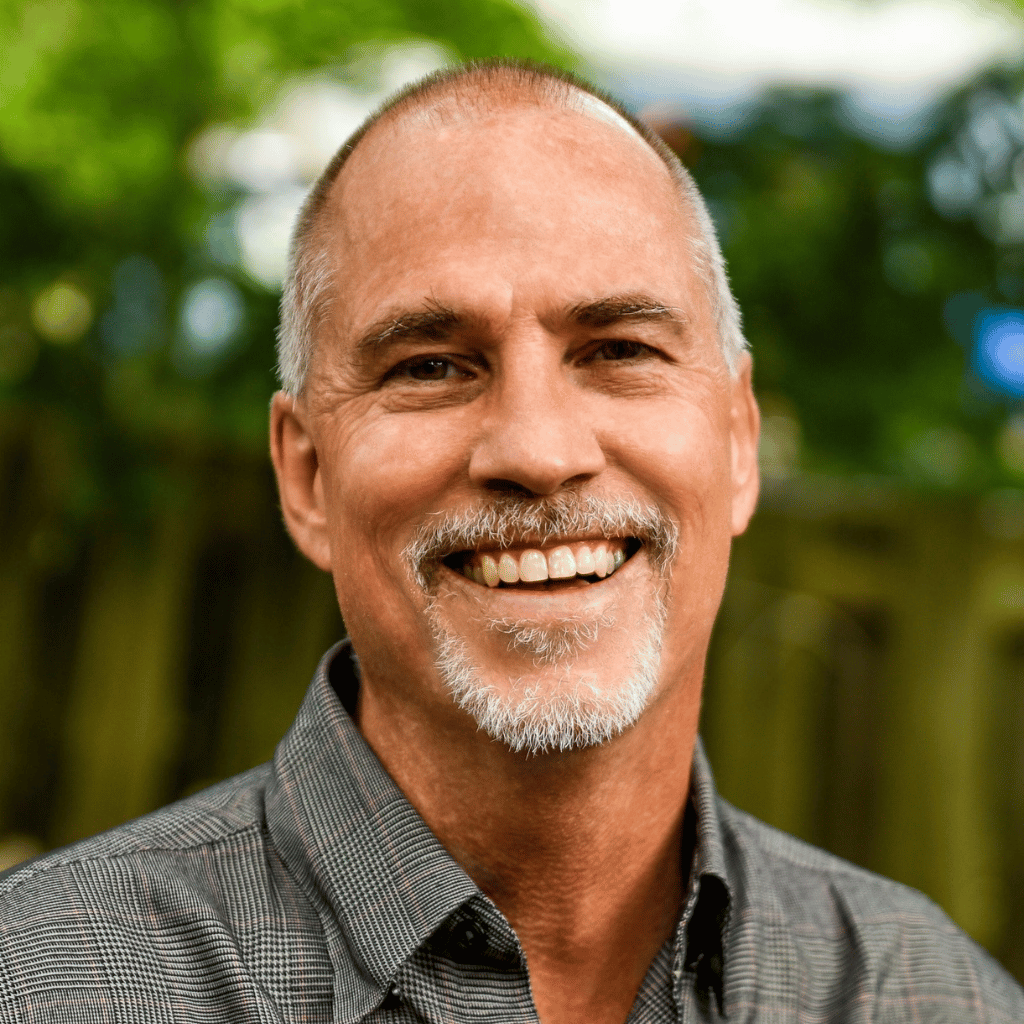
Article By Kevin Suboski

Entrepreneurial Leadership Coach & Founder of Livingston Entrepreneurial Academy

Want more insights like this?

Sign up to get practical business insights delivered straight to your inbox, along with expanded articles, resources, and downloadable white papers.

Sign Up For Our Newsletter →

Explore More Articles

Reading the World: What Entrepreneurs Need to See Right Now

article 1

There’s something in the air right now that’s hard to ignore.

If you’re building something, how you interpret this moment will shape what you do next.

People feel it in different ways. Some feel frustrated, anxious, or like the system just doesn’t work anymore. More often than not, I hear a version of the same thought: “Something is wrong… and I don’t think it’s going to get better.”

I’ve been spending some time sitting with that. Not trying to argue with it. Not trying to fix it. Just trying to understand what might actually be going on underneath it.

Here’s a what I’m starting to see.

What’s Actually Breaking Down

Most people think what we’re experiencing is primarily economic or political. That it’s about inflation, inequality, elections, policy, or “late-stage capitalism.”

I don’t think that’s wrong, but I don’t think it tells the whole story.

What I’m seeing is that we’re in the middle of something deeper.

We’re losing a shared way of understanding the world.

There used to be a set of assumptions most people operated inside of. Work hard and you can get ahead. Institutions are generally trustworthy, and the system, while imperfect, basically works.

That shared understanding made coordination possible. It allowed people to make decisions, take risks, and move forward with some level of confidence.

What I’m noticing now is that this shared understanding is beginning to crumble.

Different Realities, Not Just Different Opinions

Some people still believe the system works, that opportunity is there, that things are fundamentally okay if you play the game well.

Others are looking at the exact same world and seeing something very different. They see a system that is rigged, institutions that don’t take care of people, and a future that feels increasingly uncertain.

And here’s the important part:

These are not just different opinions.

They are different realities.

When that happens, coordination becomes difficult. Conversations feel impossible, trust erodes, and everything starts to feel more unstable than it actually is.

The Stories We Start to Tell

As human beings, we are wired to look for threats. We imagine worst-case scenarios and then treat them as if they are inevitable.

So when the shared understanding starts to break down, our biology kicks in. We start to tell ourselves stories about where this is going.

“This is the beginning of the end.”

“This is how it all falls apart.”

“This is permanent.”

Those stories feel true, but they are not always accurate.

A Different Way to Look at This Moment

There’s a model I’ve been revisiting lately, from The Fourth Turning Is Here, that suggests societies move through recurring phases. Periods of stability, questioning, unraveling, and crisis where things are reorganized.

I’m not interested in treating that as a rigid prediction. But it offers a useful orientation.

If you look at what’s happening right now through that lens, it’s not hard to see that we may be in one of those crisis phases. A period where existing structures are no longer holding the way they used to, and something new is forming.

That can be uncomfortable and disruptive, but it is not the same as everything falling apart permanently.

The Role of the Entrepreneur

If you’re an entrepreneur, this moment matters.

While many people respond by pulling back or assuming the worst, entrepreneurs have a different role.

Actually, they have two.

The first is practical.

If you can see that we are in a period of breakdown and reorganization, you can position your business accordingly. Pay attention to where things are not working, where people are frustrated, and where systems are failing to take care of them, and create offers that meet those needs.

There is real economic opportunity in moments like this for those who can see clearly.

The second role is even more important.

Entrepreneurs are one of the few groups that can respond to breakdowns by creating something new that actually works.

When large institutions lose trust, most people don’t have the ability to change them. They can vote, they can complain, or they can withdraw.

Entrepreneurs can build.

They can restore trust in small, meaningful domains. They can create products, services, and experiences that take care of people in ways the larger system currently is not.

In that sense, entrepreneurship is not just an economic activity.

It is a social function.

And in periods like this, it becomes essential.

Where Opportunity Actually Lives

There’s a subtle shift available here.

If you start to see what’s happening not as “everything is broken,” but as “there are breakdowns in how things are working,” you begin to see possibility again.

Breakdowns are where entrepreneurship lives.

It means recognizing the difference between what is actually happening, what we are telling ourselves about it, and how we choose to respond.

Because the stories we adopt in moments like this shape the actions we take. And those actions shape the results we get.

A Question to Sit With

For now, I’ll leave you with a question:

Where, in your world, are things not working the way they should… and what would it look like to take care of that?

Article By Kevin Suboski

Entrepreneurial Leadership Coach & Founder of Livingston Entrepreneurial Academy

Want more insights like this?

Sign up to get practical business insights delivered straight to your inbox, along with expanded articles, resources, and downloadable white papers.

Get the insights →